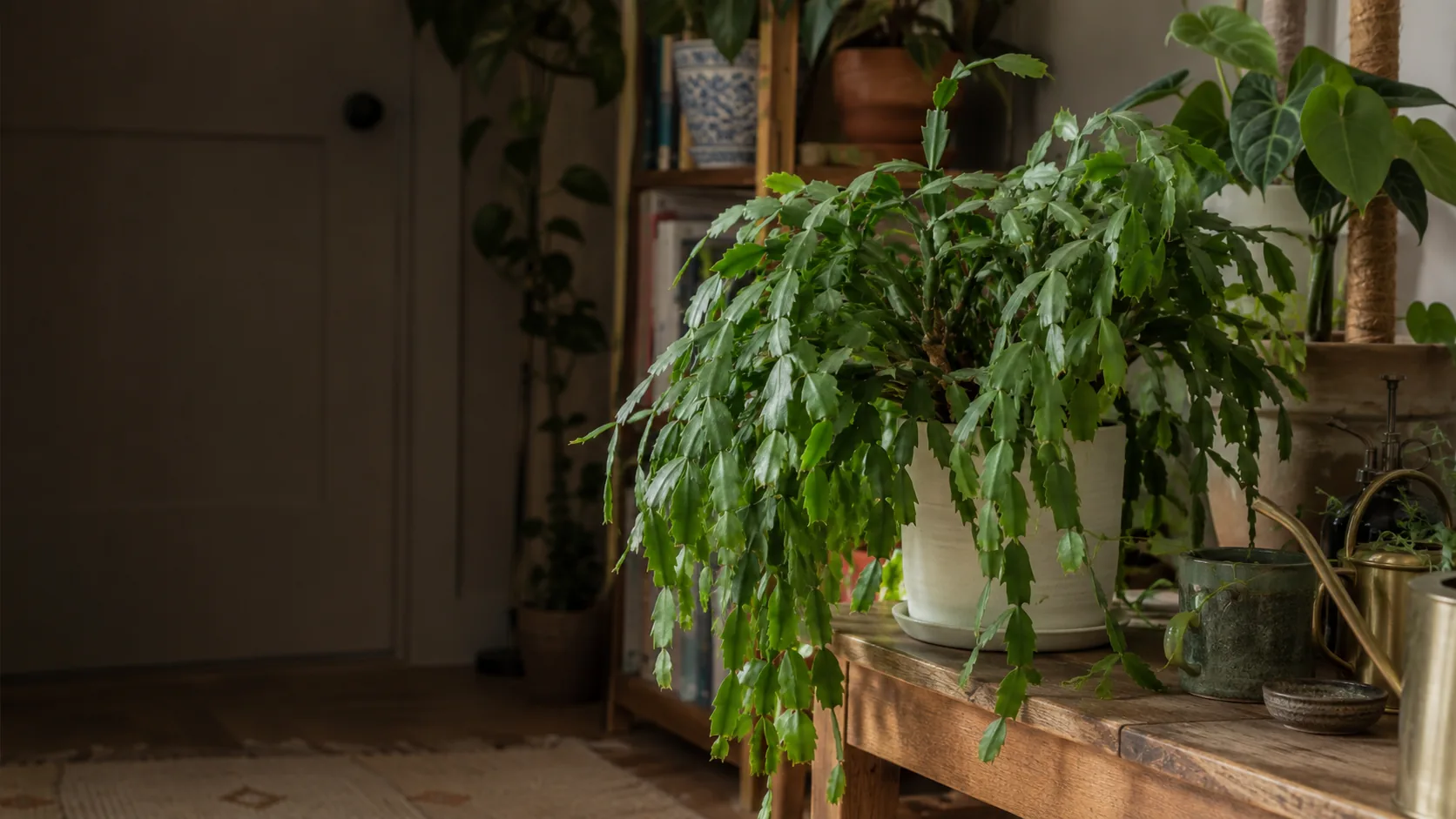
Thanksgiving Cactus
Trailing epiphytic cactus with segmented green stems and showy winter blooms, ideal for windowsills, tabletops, or hanging baskets.
Medium LightBeginner FriendlyCompact ScaleHanging PlantNon-Toxic
Ornamentalalso known as: Christmas cactus, False Christmas Cactus
Assessment
Is This For Me?
light_mode
Light ExposureinfoIndoor light recommendation based on the plant's native habitat. "Bright indirect" means near a window but shielded from direct rays.
Medium Indirect — Provide appropriate light conditions.
opacity
Watering HabitinfoHow forgiving this plant is when you miss a watering or accidentally overwater. High tolerance means more room for error.
High — Water when soil surface is dry.
psychology
Maintenance DifficultyinfoOverall ease of care rating. Beginner-friendly plants communicate their needs clearly through visible signs.
High — Great for beginners. Communicates needs clearly.
straighten
Spatial RequirementinfoExpected mature size in a typical indoor environment. Actual size depends on light, pot size, and growing conditions.
Compact — Best for Bedroom, Living Room, Bathroom, Home Office.
schedule
Seasonal BehaviourinfoHow this plant's growth changes with the seasons. Use this to adjust your care routine throughout the year.
Spring / Summer Grower — Only actively grows in warm months. Goes quiet in winter — this is normal.
thermostat
Temperature NeedsinfoThis range represents the plant's survival tolerance. Optimal growing temperatures are typically 5-10°C higher than the minimum.
10°C – 32°C — Cool-Tolerant — Standard indoor is warm enough. Tolerates cooler rooms — no special heating needed.
Appearance & Space
expand
Leaf Size
infoSmaller than 5 cm — typical of delicate, fine-textured plants like baby tears or creeping sedums.Small
texture
Leaf Surface
infoA gentle, soft sheen rather than a mirror finish. Subtle glow under indoor lighting.Semi Gloss
texture
Leaf Texture
infoPlump and water-filled — press gently and it feels spongy. Designed to store moisture.Succulent
shape_line
Leaf Shape
infoBroad and rounded at the tip, narrowing toward the base — like an inverted spoon.Spatulate
content_copy
Leaf Type
infoTrue leaves are so tiny you barely notice them. What looks like "leaves" are actually modified stems or spines.Reduced Or Absent
crop_portrait
Visual Form
infoStems hang down over the pot edge, creating a waterfall of foliage. Ideal for shelves and hanging pots.Trailing
grass
Foliage Density
infoPacked full of leaves — can't see through at all. Lush, full, and privacy-friendly.Dense
Size Gauge
Height
Compact / Desk (0.3m)
Spread
Compact (0.6m)
Display Position
Hanging, Tabletop, Windowsill
Perfect for
Living Room, Bedroom, Bathroom, Home Office
Color Palette
Mid Green
Core Care Logic
01
How Often to Water
Let the soil dry out almost completely before watering again. When in doubt, wait two more days.
02
Finding the Right Light
An east or north window is ideal. You should be able to read a book comfortably, but never see direct sun on the leaves.
03
Choosing the Right Soil
This one needs airflow around the roots. Use a blend of bark chips, perlite, and charcoal. The mix should feel light and loose in your hands, not compact.
04
Temperature & Humidity
Happy in cooler rooms — anywhere between 10–32°C is fine. Avoid placing near radiators or heat vents. Likes a bit more moisture in the air (50–60%). Grouping it with other plants or a pebble tray helps.
05
What to Expect
This is a steady, moderate grower — repot every couple of years and mostly takes care of itself. Just remove the occasional yellow leaf.
What Makes It Special
Epiphytic cactus endemic to the coastal mountains of Rio de Janeiro state, southeastern Brazil, growing on trees or rocks at 700–1,000 m elevation in the Atlantic Forest — one of the few cacti adapted to tropical forest canopy rather than desert
auto_awesomeListed as Vulnerable on the IUCN Red List
auto_awesomeOne of the parent species of the popular Christmas cactus, Thanksgiving cactus, and zygocactus houseplant hybrids
Botanical Archive
Cactaceae · Schlumbergera
Schlumbergera truncata (Haw.) Moran
Brazil Southeast
expand_more
Botanical Archive
Cactaceae · Schlumbergera
Schlumbergera truncata (Haw.) Moran
Brazil Southeast
Storage and Survival Organ
Fleshy Stems
How this plant survives unfavorable seasons
Seasonal Growth Cycle
Seasonal Spring Summer Active
When to expect new growth and feed actively
Clonal Spread
Basal Offsets
How this plant naturally expands in a pot
Root Sensitivity
Low
How carefully you should handle roots during repotting
Attachment Strategy
Epiphytic
How this plant anchors itself in its native environment
Root System
Fine Fibrous
The structure and behavior of the root system
Light Ecology
Filtered Shade
The light environment this plant evolved to thrive in
Growth Habit
Semi Woody
How persistent and structural the plant tissue is