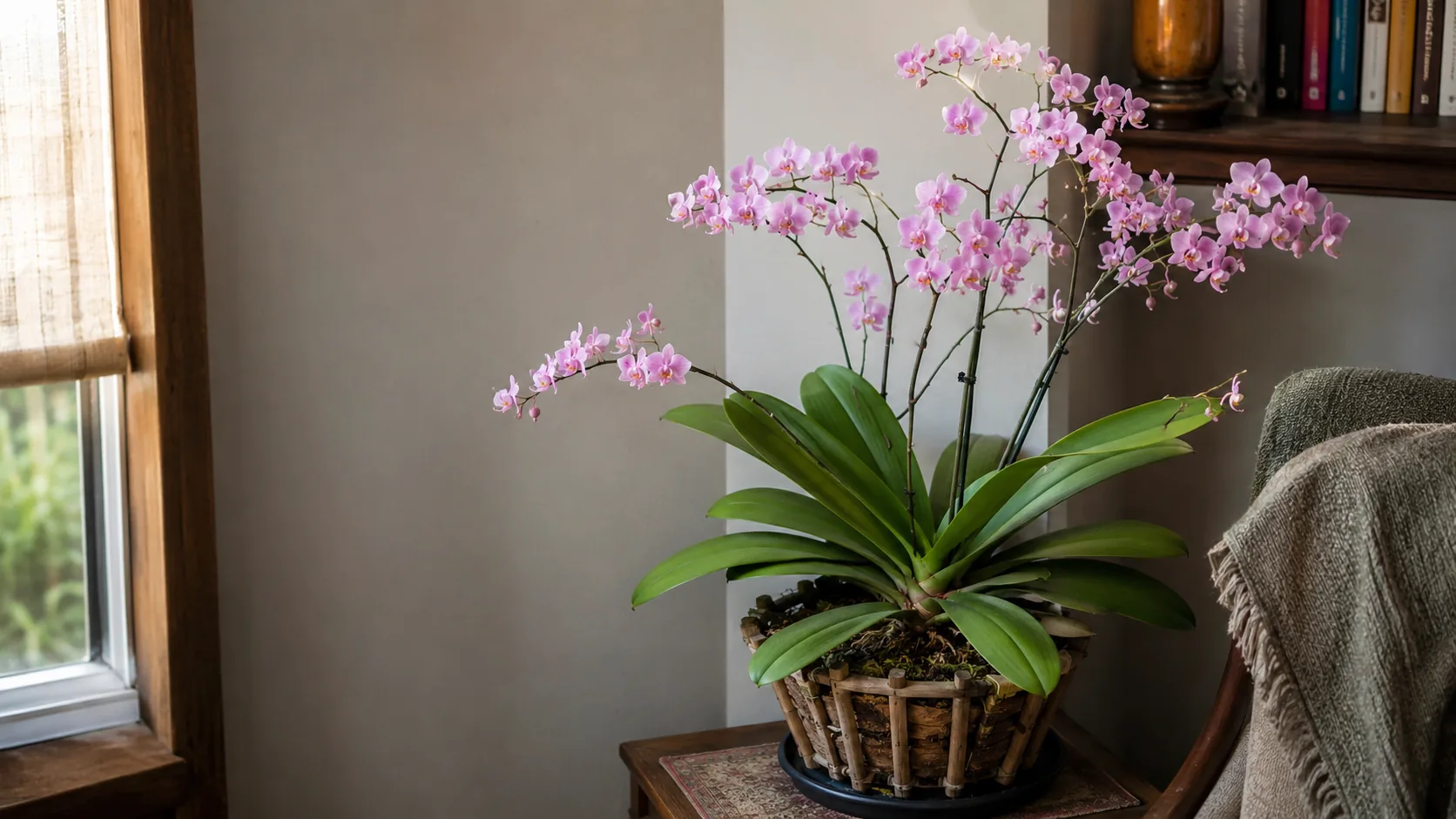
Moth Orchid
Compact epiphytic orchid with leathery leaves and pink-white flowers on arching sprays. Medium care in indirect light with high humidity.
Medium LightCompact ScaleTabletop PlantNon-Toxic
Ornamentalalso known as: Horse Moth Orchid, The Horse Phalaenopsis
Assessment
Is This For Me?
light_mode
Light ExposureinfoIndoor light recommendation based on the plant's native habitat. "Bright indirect" means near a window but shielded from direct rays.
Medium Indirect — Provide appropriate light conditions.
opacity
Watering HabitinfoHow forgiving this plant is when you miss a watering or accidentally overwater. High tolerance means more room for error.
Low — Water when soil surface is dry.
psychology
Maintenance DifficultyinfoOverall ease of care rating. Beginner-friendly plants communicate their needs clearly through visible signs.
Medium — Needs basic observation skills.
straighten
Spatial RequirementinfoExpected mature size in a typical indoor environment. Actual size depends on light, pot size, and growing conditions.
Compact — Best for Bedroom, Living Room, Bathroom, Home Office.
schedule
Seasonal BehaviourinfoHow this plant's growth changes with the seasons. Use this to adjust your care routine throughout the year.
Slows in Winter — Growth dips during shorter days. Ease off watering and skip fertilizer until spring.
thermostat
Temperature NeedsinfoThis range represents the plant's survival tolerance. Optimal growing temperatures are typically 5-10°C higher than the minimum.
16°C – 30°C — Standard Indoor — Typical room temperature works well. No extra attention needed.
Appearance & Space
expand
Leaf Size
infoBetween 5 and 20 cm — the most common range for houseplants. Think peace lily or Chinese evergreen.Medium
texture
Leaf Surface
infoA gentle, soft sheen rather than a mirror finish. Subtle glow under indoor lighting.Semi Gloss
texture
Leaf Texture
infoThick and firm like a belt. Tough to tear, holds its shape well, and tolerates rough conditions.Leathery
shape_line
Leaf Shape
infoBroad and rounded at both ends. Gently curved, about twice as long as wide.Oval
content_copy
Leaf Type
infoOne continuous leaf blade, even if it has holes or shallow lobes (like Monstera).Simple
crop_portrait
Visual Form
infoLeaves radiate from the centre in a circular pattern. Star-like from above.Rosette
grass
Foliage Density
infoPartially filled — some gaps but overall good coverage. A natural, balanced look.Moderate
Size Gauge
Height
Compact / Desk (0.23m)
Spread
Compact (0.38m)
Display Position
Tabletop, Shelf, Hanging
Perfect for
Living Room, Bedroom, Bathroom, Home Office, Sunroom
Color Palette
Mid Green
Core Care Logic
01
How Often to Water
Stick your finger in the top inch of soil. If it feels dry, water thoroughly until it drains from the bottom.
02
Finding the Right Light
An east or north window is ideal. You should be able to read a book comfortably, but never see direct sun on the leaves.
03
Choosing the Right Soil
This one needs airflow around the roots. Use a blend of bark chips, perlite, and charcoal. The mix should feel light and loose in your hands, not compact.
04
Temperature & Humidity
Comfortable in normal room temperatures, 16–30°C. Nothing special needed. Thrives in high humidity (60–80%). A bathroom or kitchen spot is ideal, or use a humidifier nearby.
05
What to Expect
This is a slow grower — it won't outgrow its spot anytime soon, so enjoy it as-is and mostly takes care of itself. Just remove the occasional yellow leaf.
What Makes It Special
One of the most compact Phalaenopsis species, reaching only 15-30cm tall, making it ideal for small spaces and windowsill cultivation where larger moth orchids would be too big.
auto_awesomeProduces keiki (plantlets) on flower spike nodes that can be removed and rooted independently, a form of vegetative propagation unique among many orchids.
auto_awesomeWidely used in Phalaenopsis breeding programs as a parent species due to its compact size, floriferous nature, and color diversity (pink, white, lavender forms exist).
Botanical Archive
Orchidaceae · Phalaenopsis
Phalaenopsis equestris (Schauer) Rchb.f.
Philippines, Taiwan
expand_more
Botanical Archive
Orchidaceae · Phalaenopsis
Phalaenopsis equestris (Schauer) Rchb.f.
Philippines, Taiwan
Storage and Survival Organ
None Obvious
How this plant survives unfavorable seasons
Seasonal Growth Cycle
Year Round Mild Winter Slow
When to expect new growth and feed actively
Clonal Spread
Basal Offsets
How this plant naturally expands in a pot
Root Sensitivity
High
How carefully you should handle roots during repotting
Attachment Strategy
Epiphytic
How this plant anchors itself in its native environment
Root System
Epiphytic Adventitious
The structure and behavior of the root system
Light Ecology
Filtered Shade
The light environment this plant evolved to thrive in
Growth Habit
Semi Woody
How persistent and structural the plant tissue is