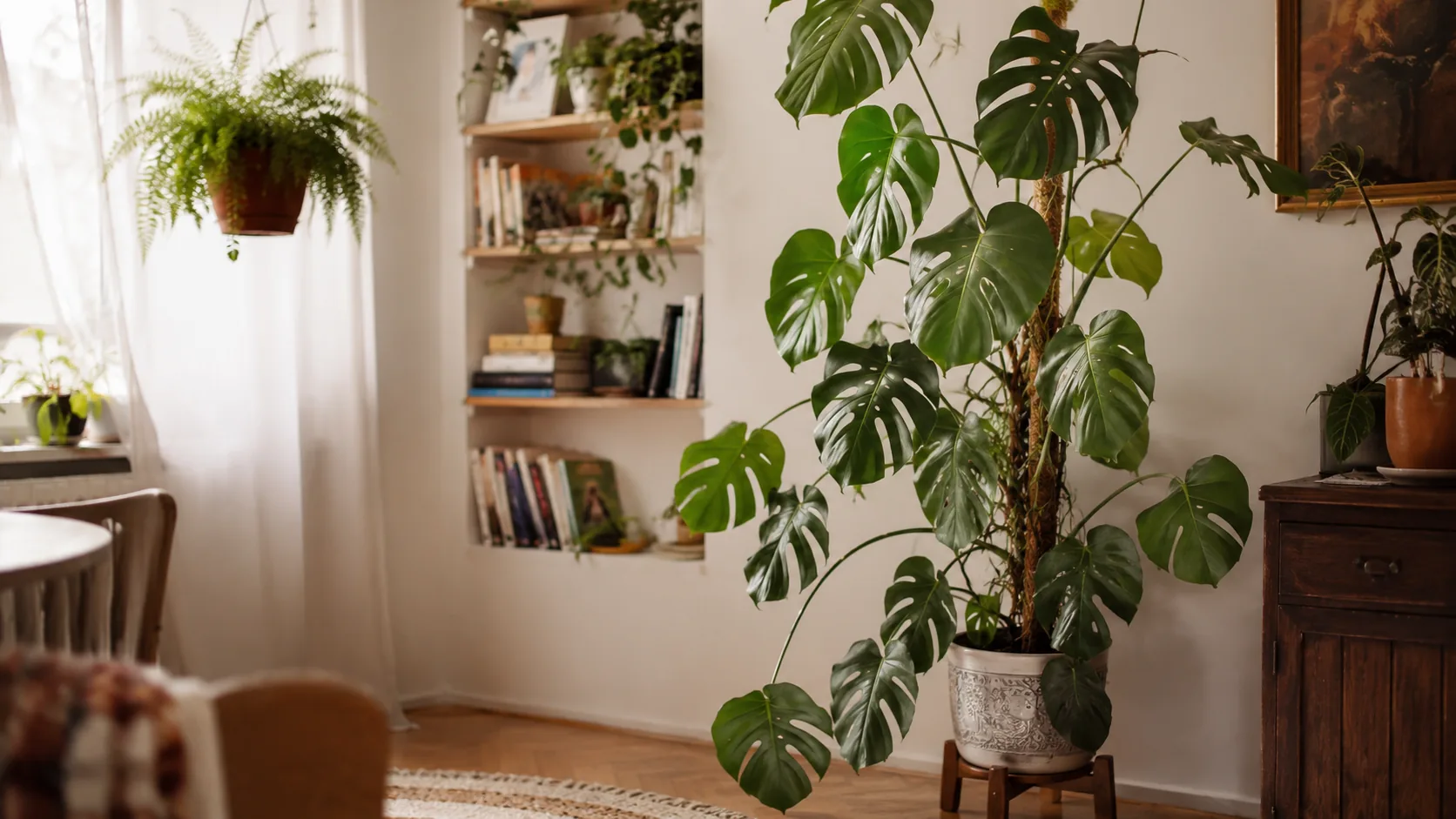
Swiss Cheese Plant
A climbing tropical aroid with large, leathery, fenestrated heart-shaped leaves; ideal for bright indoor spaces with moderate care.
Medium LightExtra Large ScaleFloor PlantToxic to Pets
Ornamentalalso known as: Ceriman, Hurricane Plant
Assessment
Is This For Me?
light_mode
Light ExposureinfoIndoor light recommendation based on the plant's native habitat. "Bright indirect" means near a window but shielded from direct rays.
Medium Indirect — Provide appropriate light conditions.
opacity
Watering HabitinfoHow forgiving this plant is when you miss a watering or accidentally overwater. High tolerance means more room for error.
Moderate — Consistent moisture preferred.
psychology
Maintenance DifficultyinfoOverall ease of care rating. Beginner-friendly plants communicate their needs clearly through visible signs.
Medium — Needs basic observation skills.
straighten
Spatial RequirementinfoExpected mature size in a typical indoor environment. Actual size depends on light, pot size, and growing conditions.
Extra Large — Best for Bedroom, Living Room, Bathroom, Home Office.
schedule
Seasonal BehaviourinfoHow this plant's growth changes with the seasons. Use this to adjust your care routine throughout the year.
Slows in Winter — Growth dips during shorter days. Ease off watering and skip fertilizer until spring.
thermostat
Temperature NeedsinfoThis range represents the plant's survival tolerance. Optimal growing temperatures are typically 5-10°C higher than the minimum.
15°C – 30°C — Standard Indoor — Typical room temperature works well. No extra attention needed.
Appearance & Space
expand
Leaf Size
infoBetween 20 and 50 cm — bold statement leaves. Fiddle-leaf fig and bird of paradise fall here.Large
texture
Leaf Surface
infoA gentle, soft sheen rather than a mirror finish. Subtle glow under indoor lighting.Semi Gloss
texture
Leaf Texture
infoThick and firm like a belt. Tough to tear, holds its shape well, and tolerates rough conditions.Leathery
shape_line
Leaf Shape
infoA clear notch at the base gives a heart outline. Romantic and instantly recognisable.Heart Shaped
content_copy
Leaf Type
infoOne continuous leaf blade, even if it has holes or shallow lobes (like Monstera).Simple
crop_portrait
Visual Form
infoTrained to grow upward on a support. Adds vertical drama and encourages larger mature leaves.Climbing Presented
grass
Foliage Density
infoPartially filled — some gaps but overall good coverage. A natural, balanced look.Moderate
Size Gauge
Height
Extra Large / Floor (2.1m)
Spread
Expansive (2.4m)
Display Position
Floor, Climbing Support
Perfect for
Living Room, Bedroom, Home Office, Bathroom
Color Palette
Deep Green
Core Care Logic
01
How Often to Water
Stick your finger in the top inch of soil. If it feels dry, water thoroughly until it drains from the bottom.
02
Finding the Right Light
An east or north window is ideal. You should be able to read a book comfortably, but never see direct sun on the leaves.
03
Choosing the Right Soil
Mix regular potting soil with about 30% perlite or orchid bark. This keeps water flowing through instead of pooling at the roots.
04
Temperature & Humidity
Comfortable in normal room temperatures, 15–30°C. Nothing special needed. Likes a bit more moisture in the air (50–60%). Grouping it with other plants or a pebble tray helps.
05
What to Expect
This is a steady, moderate grower — repot every couple of years and mostly takes care of itself. Just remove the occasional yellow leaf.
What Makes It Special
Leaves develop natural fenestrations (holes) and deep splits as they mature, creating a distinctive Swiss cheese appearance — a rare fenestration trait among Araceae, with mature leaves reaching up to 90cm across
auto_awesomeProduces edible fruit with flavor combining banana, pineapple, and mango that takes over a year to ripen; fruiting rarely occurs indoors
auto_awesomeHemiepiphytic growth habit: starts as a terrestrial plant on the forest floor, crawls toward darkness to find a tree trunk, then climbs toward the canopy using long cord-like aerial roots; juvenile-to-mature leaf phase change is climbing-triggered
Botanical Archive
Araceae · Monstera
Monstera deliciosa Liebm.
Mexico Gulf, Mexico Southeast, Mexico Southwest
expand_more
Botanical Archive
Araceae · Monstera
Monstera deliciosa Liebm.
Mexico Gulf, Mexico Southeast, Mexico Southwest
Storage and Survival Organ
None Obvious
How this plant survives unfavorable seasons
Seasonal Growth Cycle
Year Round Mild Winter Slow
When to expect new growth and feed actively
Root Sensitivity
High
How carefully you should handle roots during repotting
Phase Change
Climbing Triggered
How the plant's appearance may change as it matures
Attachment Strategy
Hemiepiphytic
How this plant anchors itself in its native environment
Root System
Epiphytic Adventitious
The structure and behavior of the root system
Light Ecology
Filtered Shade
The light environment this plant evolved to thrive in
Growth Habit
Semi Woody
How persistent and structural the plant tissue is