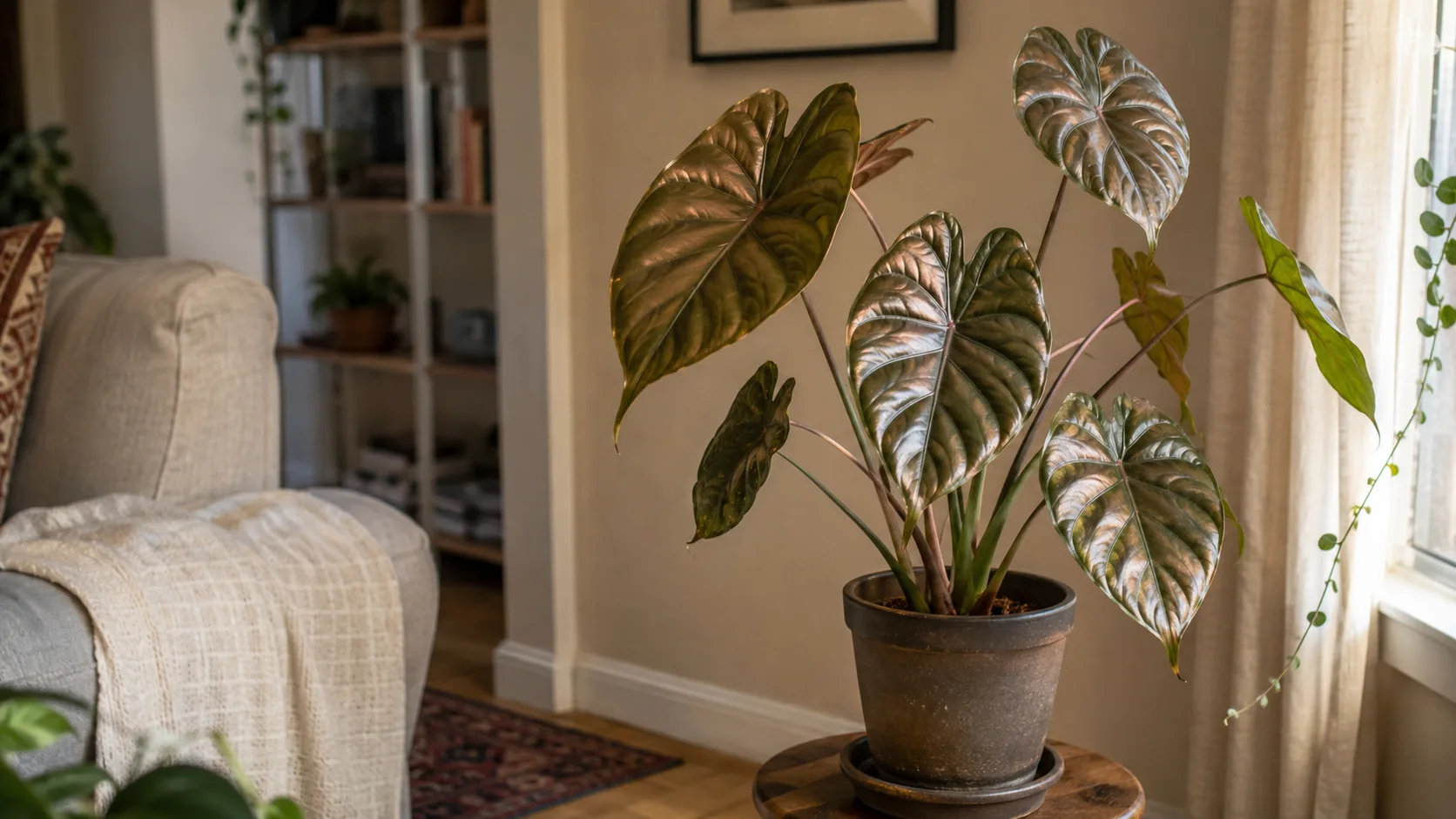
copper alocasia
A compact jewel aroid prized for its metallic bronze-copper leaves with glowing veins, suited for humid indoor spaces with bright indirect light.
Medium to Bright LightMedium ScaleFloor PlantToxic to Pets
Ornamental, Air Purifyingalso known as: Elephant Ear, elephant's ear plant
Assessment
Is This For Me?
light_mode
Light ExposureinfoIndoor light recommendation based on the plant's native habitat. "Bright indirect" means near a window but shielded from direct rays.
Medium To Bright Indirect — Needs strong ambient light. Avoid direct hot sun.
opacity
Watering HabitinfoHow forgiving this plant is when you miss a watering or accidentally overwater. High tolerance means more room for error.
Low — Water when soil surface is dry.
psychology
Maintenance DifficultyinfoOverall ease of care rating. Beginner-friendly plants communicate their needs clearly through visible signs.
Medium — Needs basic observation skills.
straighten
Spatial RequirementinfoExpected mature size in a typical indoor environment. Actual size depends on light, pot size, and growing conditions.
Medium — Fits a range of indoor spaces.
schedule
Seasonal BehaviourinfoHow this plant's growth changes with the seasons. Use this to adjust your care routine throughout the year.
Spring / Summer Grower — Only actively grows in warm months. Goes quiet in winter — this is normal.
thermostat
Temperature NeedsinfoThis range represents the plant's survival tolerance. Optimal growing temperatures are typically 5-10°C higher than the minimum.
15°C – 29°C — Standard Indoor — Typical room temperature works well. No extra attention needed.
Appearance & Space
expand
Leaf Size
infoBetween 20 and 50 cm — bold statement leaves. Fiddle-leaf fig and bird of paradise fall here.Large
texture
Leaf Surface
infoPolished, mirror-like shine. Light catches the surface clearly, creating vivid reflections.Glossy
texture
Leaf Texture
infoThick and firm like a belt. Tough to tear, holds its shape well, and tolerates rough conditions.Leathery
shape_line
Leaf Shape
infoA clear notch at the base gives a heart outline. Romantic and instantly recognisable.Heart Shaped
content_copy
Leaf Type
infoOne continuous leaf blade, even if it has holes or shallow lobes (like Monstera).Simple
crop_portrait
Visual Form
infoGrows upward with some body at the base. Vertical presence without being skinny.Upright
grass
Foliage Density
infoPartially filled — some gaps but overall good coverage. A natural, balanced look.Moderate
Size Gauge
Height
Medium / Tabletop (0.75m)
Spread
Moderate (0.75m)
Display Position
Floor, Plant Stand
Perfect for
A variety of indoor spaces
Color Palette
Mid Green
Bronze
Purple Burgundy
Core Care Logic
01
How Often to Water
Check the soil frequently — it should never dry out completely. When the surface feels just barely dry, it's time to water.
02
Finding the Right Light
Near an east or west window with a sheer curtain. Your hand should cast a soft but defined shadow.
03
Choosing the Right Soil
Mix regular potting soil with about 30% perlite or orchid bark. This keeps water flowing through instead of pooling at the roots.
04
Temperature & Humidity
Comfortable in normal room temperatures, 15–29°C. Nothing special needed. Average home humidity (40–60%) works well. No extra effort needed.
05
What to Expect
This is a fast grower — you'll see new leaves regularly and may need to repot every year but benefits from occasional pruning to keep its shape and remove dead foliage.
What Makes It Special
The species name 'cuprea' derives from the Latin for copper, referring to the unusual coppery metallic appearance of the leaves that distinguishes this species from other Alocasia.
auto_awesomeDistinctive iridescent metallic sheen on leaves with a dynamic color transformation: juvenile leaves display vibrant red flush on both surfaces, maturing to copper-bronze upper surface with dark reddish-purple underside.
auto_awesomeThick, rigid leaves with rippled texture and deeply indented veins create a unique visual and tactile experience, with the metallic sheen enhancing the ornamental appeal.
Botanical Archive
Araceae · Alocasia
Alocasia cuprea (K.Koch & C.D.Bouché) K.Koch
Borneo (Sabah)
expand_more
Botanical Archive
Araceae · Alocasia
Alocasia cuprea (K.Koch & C.D.Bouché) K.Koch
Borneo (Sabah)
Storage and Survival Organ
Rhizome
How this plant survives unfavorable seasons
Seasonal Growth Cycle
Seasonal Spring Summer Active
When to expect new growth and feed actively
Clonal Spread
Rhizomes
How this plant naturally expands in a pot
Attachment Strategy
Terrestrial
How this plant anchors itself in its native environment
Light Ecology
Filtered Shade
The light environment this plant evolved to thrive in
Growth Habit
Herbaceous Dieback
How persistent and structural the plant tissue is