The #1 Killer of Indoor Plants
Over-loving is often more fatal than neglect. Discover why too much water is the leading cause of houseplant death.
The biggest threat to your indoor plants is not neglect — it's attention. Overwatering kills more houseplants than every other cause combined, and it does so silently, below the soil line where you can't see the damage until it's too late.
Key Points
What to Do
Check every pot for a drainage hole — if it doesn't have one, either drill one or use it as a cache pot only
A cache pot setup means a plain plastic nursery pot sitting inside the decorative one — lift and empty it after every watering.
Empty saucers within 30 minutes of watering so roots don't sit in standing water
Switch from a fixed schedule to a soil-check routine (see the watering guide)
The calendar can't see your soil. Seasons, heating, and pot size change drying speed constantly — only the soil check adapts to all of them.
When you do water, pour slowly until water runs out the drainage hole, then stop
This 'water deeply, then wait' rhythm is the whole game: it wets the entire root ball and then lets oxygen back in as it dries.
If the soil surface stays wet for more than 5-6 days, your soil mix may need more perlite or orchid bark
Slow-drying soil turns every watering schedule into an overwatering schedule — fixing the mix fixes the root cause.
Frequently Asked Questions
Why is overwatering worse than underwatering?expand_more
Because plants tolerate drought far better than root suffocation. A dry plant can bounce back within days of watering, while rotted roots must regrow before the plant recovers — and advanced rot is unrecoverable. When in doubt, wait.
My plant is wilting but the soil is wet — should I water more?expand_more
No — this is the classic root rot paradox. Wilting with wet soil means damaged roots can't take up water, and more water accelerates the rot. Check roots for mushiness and a sour smell; if they're brown and soft, the plant needs an emergency repot.
Can a plant recover from overwatering?expand_more
Yes, if caught before root rot advances. Stop watering, let the soil dry several inches deep, and check the roots. Healthy white roots mean it will recover with a corrected routine; brown mushy roots mean trimming away the rot and repotting into fresh mix.
Related Plants
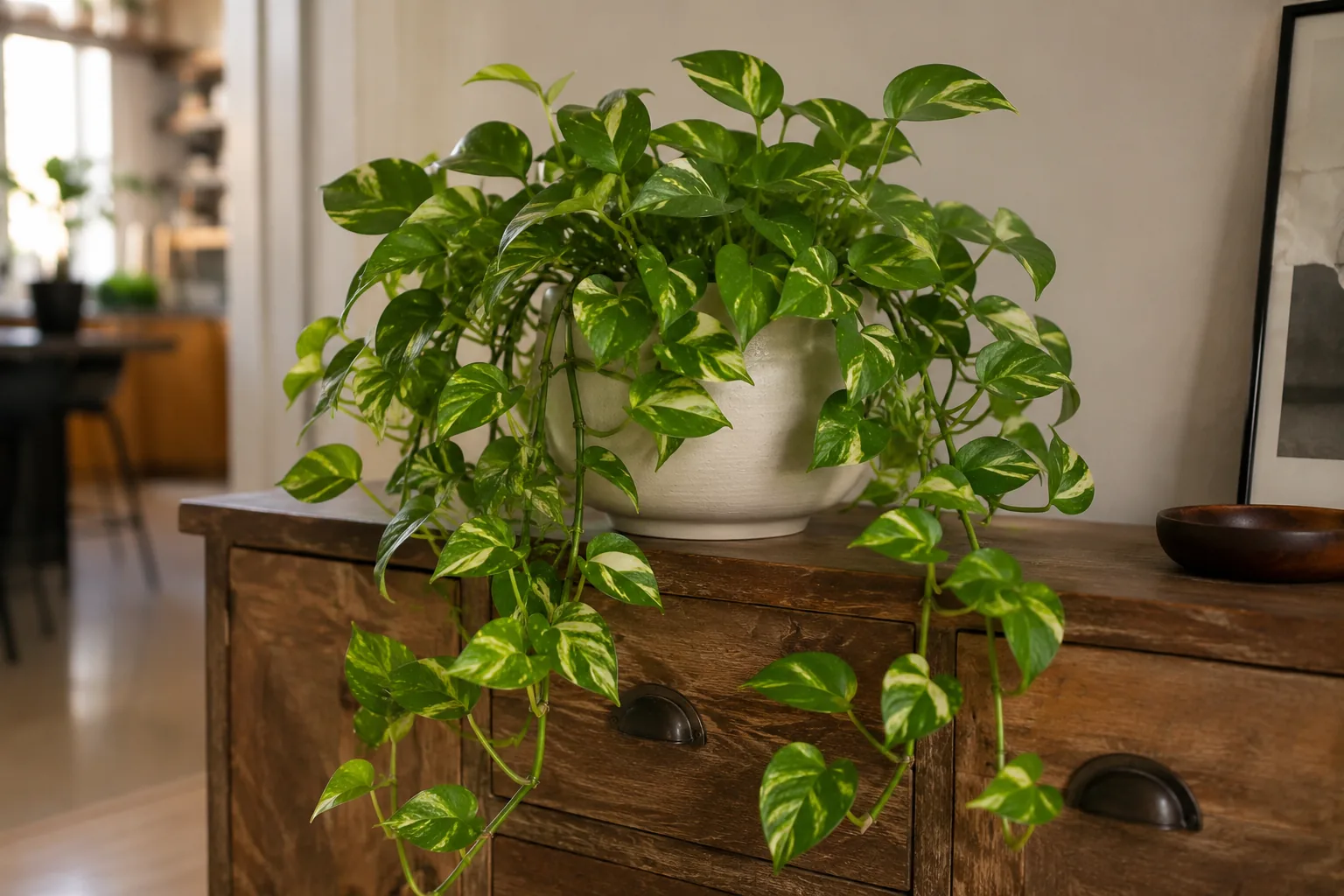
Golden Pothos
A tropical vine with glossy heart-shaped green-and-yellow leaves; an easy, adaptable trailing houseplant for most indoor spaces.
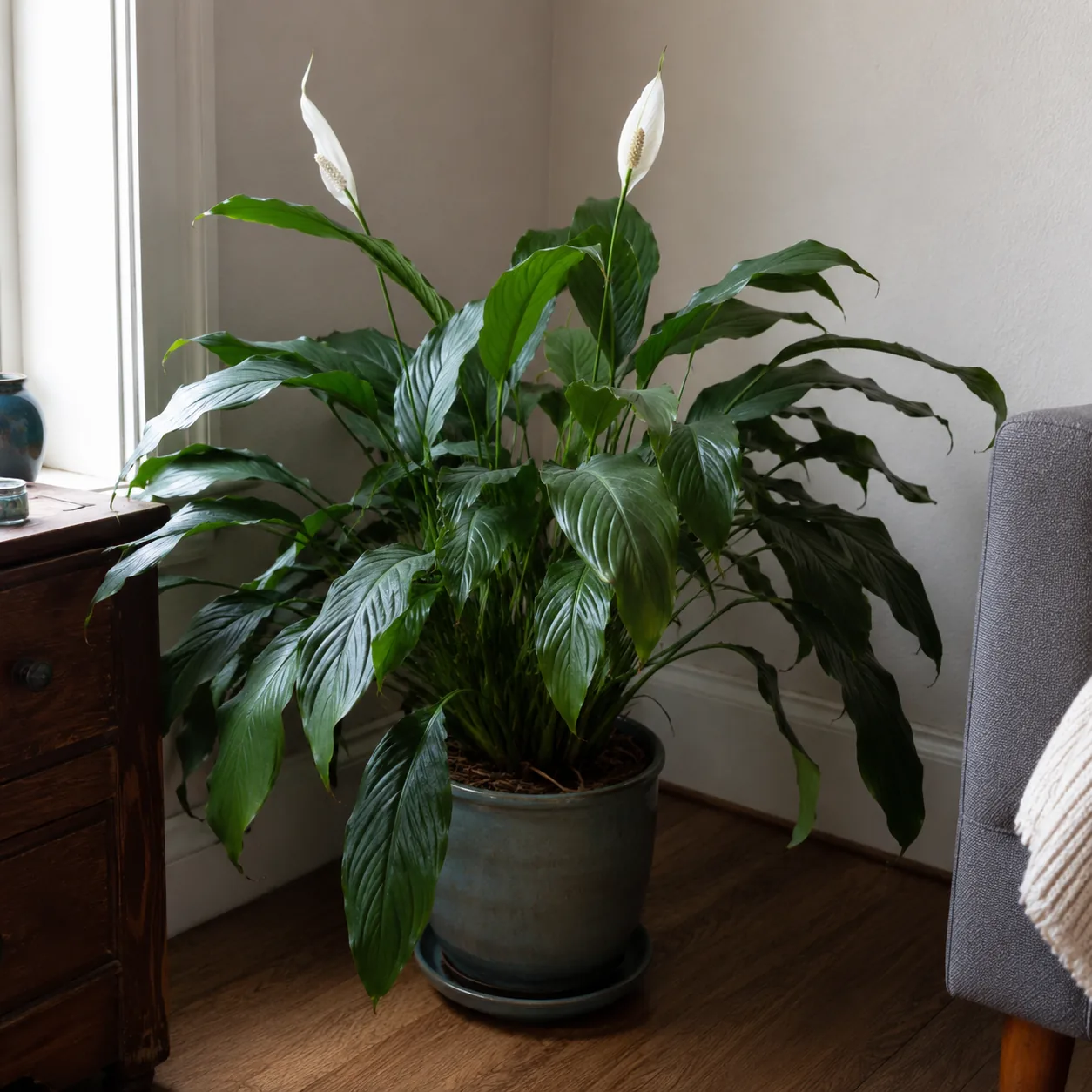
Peace Lily
A compact tropical aroid with glossy green leaves and elegant white spathes, well-suited to low-to-bright indirect indoor light.
Related Problems
If your plant is already showing symptoms, start with one of these diagnosis pages.
Roots turning brown, mushy, and foul-smelling — caused by persistently wet soil and poor drainage. One of the most serious indoor plant problems.
Indoor plant leaves turning yellow — most commonly caused by overwatering, low light, environmental shock, natural leaf aging, or nutrient deficiency.
Leaves falling off suddenly or gradually — most commonly caused by overwatering, environmental shock, underwatering, or low humidity.